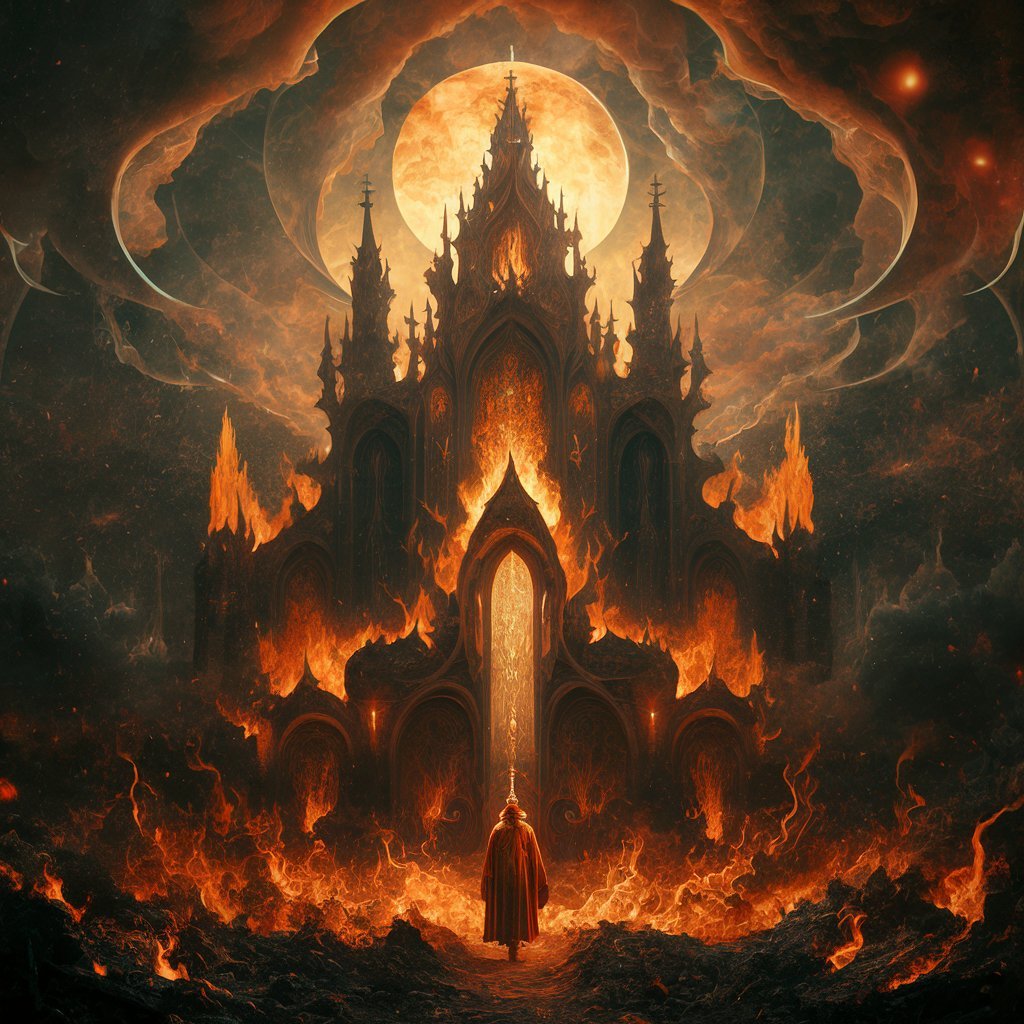
The concept of hellfire has been one of the most powerful and enduring symbols in the history of religion and theology. Across centuries and civilizations, it has represented the ultimate form of divine judgment, a place or state of eternal punishment reserved for those who reject moral or spiritual truth. Found in the sacred texts of Christianity, Islam, and other faith traditions, hellfire serves as both a theological warning and a moral metaphor, shaping how believers understand sin, justice, and the afterlife.
In religious philosophy, hellfire is not merely a physical realm of torment but a profound spiritual concept that reflects humanity’s struggle with good and evil, salvation and damnation, mercy and justice. The imagery of fire—consuming, purifying, and eternal—has made hellfire one of the most vivid and emotionally charged ideas in religious doctrine. This article explores the origins, interpretations, and cultural significance of hellfire, examining how it has influenced theological thought, biblical interpretation, and the broader understanding of divine punishment throughout history.
The Origins of the Concept of Hellfire
The idea of hellfire can be traced back to ancient religious traditions that sought to explain the fate of the soul after death. In early civilizations, the afterlife was often depicted as a shadowy underworld where the dead resided, but as moral and theological systems evolved, the notion of eternal punishment emerged as a reflection of divine justice.
In Judeo-Christian theology, the concept of hellfire developed from the Hebrew term Gehenna, a valley outside Jerusalem associated with idolatry and destruction. Over time, Gehenna became a symbol of divine retribution—a place where the wicked would face eternal damnation. In the New Testament, Jesus frequently referred to hellfire as a warning against sin and moral corruption, describing it as a place “where the fire is not quenched.” This imagery reinforced the idea that hellfire was not only a physical punishment but also a spiritual separation from God’s presence.
In Islamic theology, the concept of hellfire, known as Jahannam, is vividly described in the Qur’an as a realm of intense suffering for those who reject faith and righteousness. Yet, even within these depictions, there is an emphasis on divine justice and mercy—punishment is not arbitrary but a consequence of moral choice. Thus, across religious traditions, hellfire serves as both a deterrent against wrongdoing and a manifestation of divine order in the afterlife.
Theological Interpretations of Hellfire
The theological interpretation of hellfire varies widely among religious scholars and traditions. In Christian theology, debates about the nature of eternal punishment have persisted for centuries. Some theologians interpret hellfire literally—as a place of unending physical torment—while others view it metaphorically, representing the soul’s alienation from divine love.
The Catholic Church, for instance, traditionally teaches that hellfire signifies the eternal separation from God resulting from unrepented mortal sin. The Eastern Orthodox Church, however, often emphasizes the spiritual dimension of hellfire, interpreting it as the experience of God’s presence as torment for those who reject His grace. In Protestant theology, interpretations range from literal to symbolic, with some denominations focusing on hellfire as a moral warning rather than a physical reality.
In Islamic theology, Jahannam is described in vivid detail, yet scholars emphasize that its purpose is not merely punitive but corrective and just. The Qur’an portrays hellfire as a manifestation of divine justice, where each soul receives recompense according to its deeds. Some Islamic philosophers, such as Al-Ghazali and Ibn Arabi, have even suggested that hellfire may serve a purifying function, ultimately leading souls toward divine mercy.
Across all these interpretations, hellfire remains a central element of religious doctrine, symbolizing the consequences of moral failure and the seriousness of divine accountability.
Hellfire in Religious Philosophy and Spiritual Symbolism
Beyond literal interpretations, hellfire holds deep symbolic meaning in religious philosophy. It represents the inner torment of the soul estranged from truth, love, and divine harmony. In this sense, hellfire is not confined to the afterlife but can be experienced in the present world through guilt, despair, and spiritual alienation.
Philosophers and mystics have long explored hellfire as a metaphor for the human condition. In Christian mysticism, figures like Dante Alighieri depicted hellfire in The Divine Comedy as a reflection of moral order, where each punishment mirrors the sin committed. In Islamic Sufism, Jahannam is often interpreted as the burning of the ego—the purification of the self through suffering and repentance.
From a spiritual perspective, hellfire serves as a reminder of the soul’s journey toward enlightenment. It symbolizes the consequences of rejecting divine truth and the transformative power of repentance. In this way, hellfire is not merely a threat but a call to moral awakening, urging believers to seek redemption and align their lives with divine will.
Cultural and Historical Significance of Hellfire
Throughout history, the imagery of hellfire has profoundly influenced art, literature, and culture. Medieval paintings, Gothic cathedrals, and religious sermons often depicted hellfire in vivid detail to evoke fear and inspire repentance. The hellfire motif became a powerful tool for moral instruction, reinforcing the authority of religious institutions and the importance of ethical conduct.
In literature, hellfire has served as a central theme in works ranging from Dante’s Inferno to John Milton’s Paradise Lost. These masterpieces not only shaped theological understanding but also reflected the cultural anxieties of their time—questions about justice, free will, and the nature of evil. In modern culture, hellfire continues to appear in films, music, and popular media, often reinterpreted as a symbol of inner conflict, guilt, or existential despair.
Historically, the concept of hellfire also played a role in shaping social and political thought. During the Reformation and Enlightenment, debates about eternal punishment and divine justice influenced discussions about morality, human rights, and the nature of authority. Even today, the idea of hellfire continues to provoke reflection on the relationship between justice, mercy, and the human conscience.
Hellfire and the Afterlife: Eternal Punishment or Divine Justice?
One of the most profound theological questions surrounding hellfire concerns its duration and purpose. Is hellfire truly eternal, or does it serve a temporary, purifying function? Different religious traditions offer varying answers.
In traditional Christian doctrine, hellfire is eternal, representing the irreversible consequence of rejecting God’s grace. However, some modern theologians advocate for annihilationism, the belief that the wicked will ultimately cease to exist rather than suffer eternally. Others propose universal reconciliation, suggesting that divine mercy will eventually restore all souls, even those condemned to hellfire.
In Islamic theology, while Jahannam is often described as eternal, some interpretations allow for the possibility of eventual redemption for certain souls. This reflects a broader theological tension between divine justice and mercy—a theme that lies at the heart of all discussions about hellfire and eternal punishment.
Ultimately, the concept of hellfire challenges believers to confront the moral and spiritual consequences of their actions. It serves as both a warning and a mystery, reminding humanity of the profound seriousness of moral choice and the infinite depth of divine justice.
Conclusion
The concept of hellfire stands as one of the most powerful and enduring symbols in religious belief and theological thought. Whether interpreted literally or metaphorically, it embodies the tension between justice and mercy, punishment and redemption, fear and hope. Across centuries, hellfire has shaped humanity’s understanding of divine judgment, eternal punishment, and the moral order of the universe.
In the end, hellfire is not merely a doctrine of fear but a profound reflection on the human condition. It calls believers to self-examination, repentance, and spiritual transformation. By contemplating hellfire, individuals are reminded of the eternal significance of their choices and the boundless mercy that lies at the heart of divine truth.
Frequently Asked Questions (FAQ)
1. What is hellfire in religious belief?
Hellfire refers to the concept of eternal punishment or divine judgment in the afterlife, often depicted as a realm of fire and torment for the wicked in various religious traditions.
2. Is hellfire a literal place or a metaphor?
Interpretations vary. Some traditions view hellfire as a literal place of punishment, while others see it as a metaphor for spiritual separation from God or the inner torment of the soul.
3. What does the Bible say about hellfire?
In the Bible, particularly the New Testament, hellfire is described as a place “where the fire never goes out,” symbolizing eternal separation from God for those who reject His will.
4. How is hellfire described in Islam?
In Islamic theology, Jahannam (hellfire) is depicted as a realm of intense suffering for those who deny faith, but it also reflects divine justice and the consequences of moral failure.
5. Is hellfire eternal?
Traditional interpretations hold that hellfire is eternal, but some modern theologians propose that it may be temporary or purifying, leading ultimately to divine mercy.
6. What is the purpose of hellfire in theology?
Theologically, hellfire serves as a manifestation of divine justice, emphasizing moral accountability and the consequences of sin in the afterlife.
7. How has the concept of hellfire influenced culture?
Hellfire has inspired countless works of art, literature, and philosophy, shaping cultural understandings of morality, justice, and the human soul.
8. What is the difference between hell and hellfire?
“Hell” refers to the broader concept of the realm of the damned, while “hellfire” specifically emphasizes the fiery aspect of eternal punishment and divine retribution.