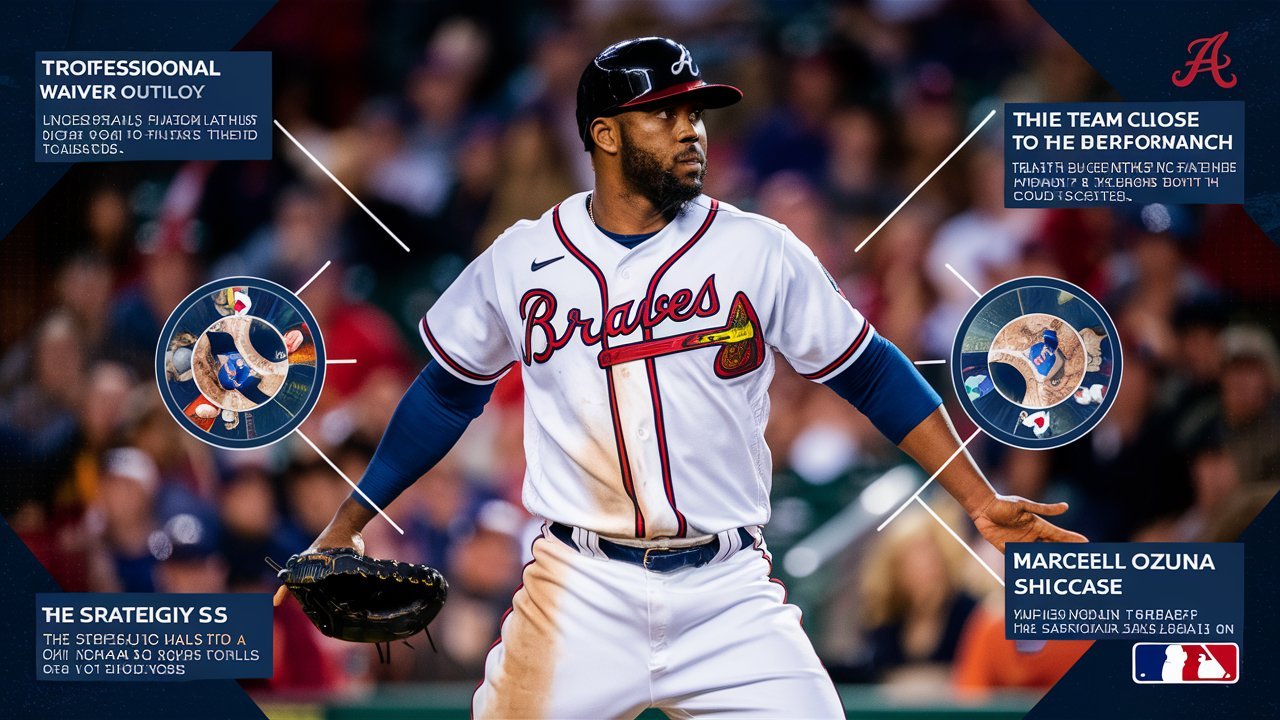
The phrase “Braves Marcell Ozuna waiver candidate” has surfaced repeatedly in MLB discussions, reflecting speculation about roster flexibility, payroll strategy, and long-term competitiveness. As the Atlanta Braves evaluate their roster composition during pivotal stretches of the season, attention inevitably turns toward high-salary veterans whose production must justify their contracts. In this context, Marcell Ozuna, once signed to provide middle-of-the-order power, becomes a focal point of analysis. We examine performance metrics, contractual obligations, clubhouse considerations, roster depth, and competitive strategy to determine whether labeling Ozuna a waiver candidate is realistic or merely speculative noise.
Marcell Ozuna’s Role with the Atlanta Braves
When the Braves signed Marcell Ozuna, the expectation was clear: consistent power production, run-driving capability, and stability in the designated hitter role. Ozuna had previously demonstrated All-Star level performance and the ability to anchor a lineup during crucial stretches. His offensive upside made him an attractive long-term investment.
However, baseball is a results-driven industry. The Braves operate in a competitive National League landscape, and every roster spot carries strategic weight. If performance dips, salary commitments and positional redundancy can quickly turn a veteran into a waiver conversation topic. The term waiver candidate does not necessarily imply imminent release, but rather signals a scenario where front-office flexibility becomes paramount.
Understanding the Waiver Candidate Concept in MLB
To fully evaluate whether Ozuna fits the narrative of a waiver candidate, we must clarify what the term represents. In Major League Baseball, placing a player on waivers can serve multiple purposes:
-
Testing trade interest
-
Creating payroll relief
-
Clearing a 40-man roster spot
-
Providing an opportunity for another club to assume contract obligations
For high-salary veterans, waivers often function as a strategic probe rather than an outright dismissal. If no team claims the player, the original club retains control. If claimed, the claiming team may assume financial responsibility. Thus, the phrase Braves Marcell Ozuna waiver candidate reflects financial and performance calculus rather than emotional reaction.
Performance Metrics and Offensive Contribution
Evaluating Ozuna’s status requires examining offensive production in context. Key indicators include:
-
Home run totals
-
Slugging percentage
-
On-base plus slugging (OPS)
-
Strikeout-to-walk ratio
-
Clutch performance metrics
When Ozuna produces consistent power numbers, he remains an asset. If strikeout rates climb while run production stagnates, roster pressure intensifies. The Braves, known for a dynamic offensive core, prioritize efficiency and lineup balance. If younger or more versatile players begin outperforming expectations at lower cost, management may reassess resource allocation.
Baseball economics reward productivity relative to salary. When production aligns with compensation, stability follows. When imbalance emerges, waiver discussions gain momentum.
Contract Structure and Payroll Considerations
The financial component is central to the waiver candidate discussion. Ozuna’s contract represents a significant investment. In a league governed by luxury tax thresholds and strategic payroll planning, even well-capitalized organizations must monitor long-term commitments.
Key contract factors influencing waiver speculation include:
-
Remaining guaranteed salary
-
Deferred payments
-
Luxury tax impact
-
Trade market viability
If the Braves approach critical payroll limits, moving a contract—even partially—can unlock flexibility for pitching acquisitions or bullpen reinforcements. The waiver process may be used to gauge whether another franchise sees value in assuming financial obligations.
Braves Roster Depth and Positional Flexibility
The Braves possess a roster known for offensive firepower and youthful depth. When assessing whether Ozuna becomes expendable, we must consider:
-
Emerging prospects
-
Multi-position versatility
-
Designated hitter rotation strategy
-
Injury contingencies
If younger hitters provide similar production at league-minimum salaries, strategic logic shifts. Modern roster construction favors adaptability. Players capable of rotating through multiple defensive assignments offer tactical advantage. A designated hitter with limited defensive flexibility faces higher scrutiny during roster reshuffling.
Trade Deadline Strategy and Competitive Windows
The Braves consistently position themselves as postseason contenders. In competitive windows, front offices balance loyalty with pragmatism. The phrase Braves Marcell Ozuna waiver candidate frequently surfaces near trade deadlines when teams reassess championship odds.
If the Braves prioritize pitching upgrades or bullpen reinforcement, reallocating payroll may become necessary. Waivers, trades, or salary-sharing agreements become tools within broader competitive strategy. The objective remains singular: maximize postseason viability.
Market Demand for Veteran Power Hitters
Another dimension involves league-wide demand. Teams on the fringe of playoff contention often seek experienced bats capable of elevating run production. If Ozuna demonstrates even short bursts of power consistency, market interest may strengthen.
Conversely, declining metrics reduce leverage. In such cases, waivers may serve as a mechanism to test demand discreetly. Whether another club claims him depends on cost-benefit analysis across the league.
Clubhouse Impact and Intangible Factors
Roster decisions extend beyond spreadsheets. Veteran presence, postseason experience, and clubhouse chemistry influence front-office calculations. While performance remains paramount, leadership qualities and institutional familiarity matter.
If Ozuna maintains positive clubhouse influence and productive relationships with teammates, management weighs those factors carefully. Waiver designation is never purely numerical; it reflects organizational philosophy and long-term cohesion.
Public Perception and Media Narrative
The media environment amplifies roster speculation. Headlines containing phrases like “Marcell Ozuna waiver candidate” often generate engagement regardless of immediate validity. Distinguishing between informed analysis and rumor cycles is essential.
Front offices operate deliberately. While public discourse accelerates narratives, internal evaluations prioritize data, scouting reports, and financial modeling. Media attention does not equate to imminent roster action.
Possible Scenarios Moving Forward
There are several realistic paths forward:
-
Retention and Production Surge: Ozuna elevates offensive output, solidifying his lineup position.
-
Trade via Waivers: Another team claims interest, potentially assuming salary commitments.
-
Strategic Roster Adjustment: The Braves restructure roles without immediate release.
-
Postseason-Driven Decision: Competitive positioning influences timing of any move.
Each scenario hinges on performance trends and organizational priorities.
Conclusion
The conversation surrounding Braves Marcell Ozuna waiver candidate reflects the intersection of performance evaluation, financial management, and competitive ambition. In Major League Baseball, roster decisions demand both precision and foresight. Ozuna’s status ultimately depends on measurable output, contract efficiency, and the Braves’ broader championship strategy.
While speculation persists, waiver designation remains a strategic instrument rather than a foregone conclusion. Teams competing for postseason positioning act decisively when necessary, but always within calculated frameworks. For now, the narrative remains dynamic—shaped by performance metrics, trade market signals, and organizational vision.
Frequently Asked Questions (FAQ)
Is Marcell Ozuna officially on waivers?
As of current public information, waiver discussions are speculative and tied to roster strategy rather than confirmed action.
Why would the Braves place Ozuna on waivers?
Potential reasons include payroll flexibility, roster optimization, or exploring trade interest.
Can another team claim Ozuna if placed on waivers?
Yes, another MLB team could claim him and assume contract obligations, depending on waiver type.
Does performance impact waiver decisions?
Absolutely. Offensive consistency, advanced metrics, and team needs heavily influence such evaluations.
Is this related to the MLB trade deadline?
Waiver speculation often intensifies near the trade deadline when teams reassess postseason positioning.